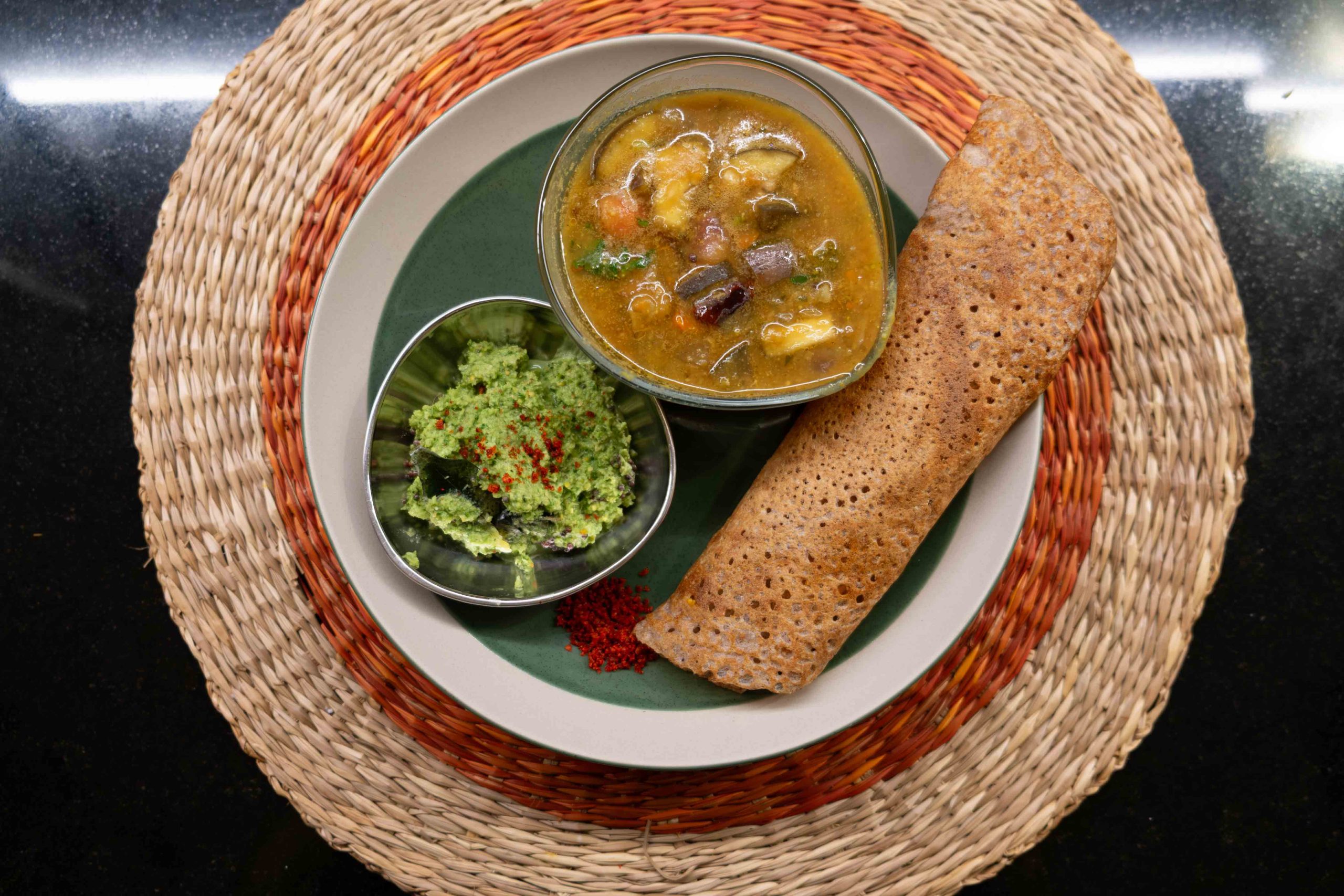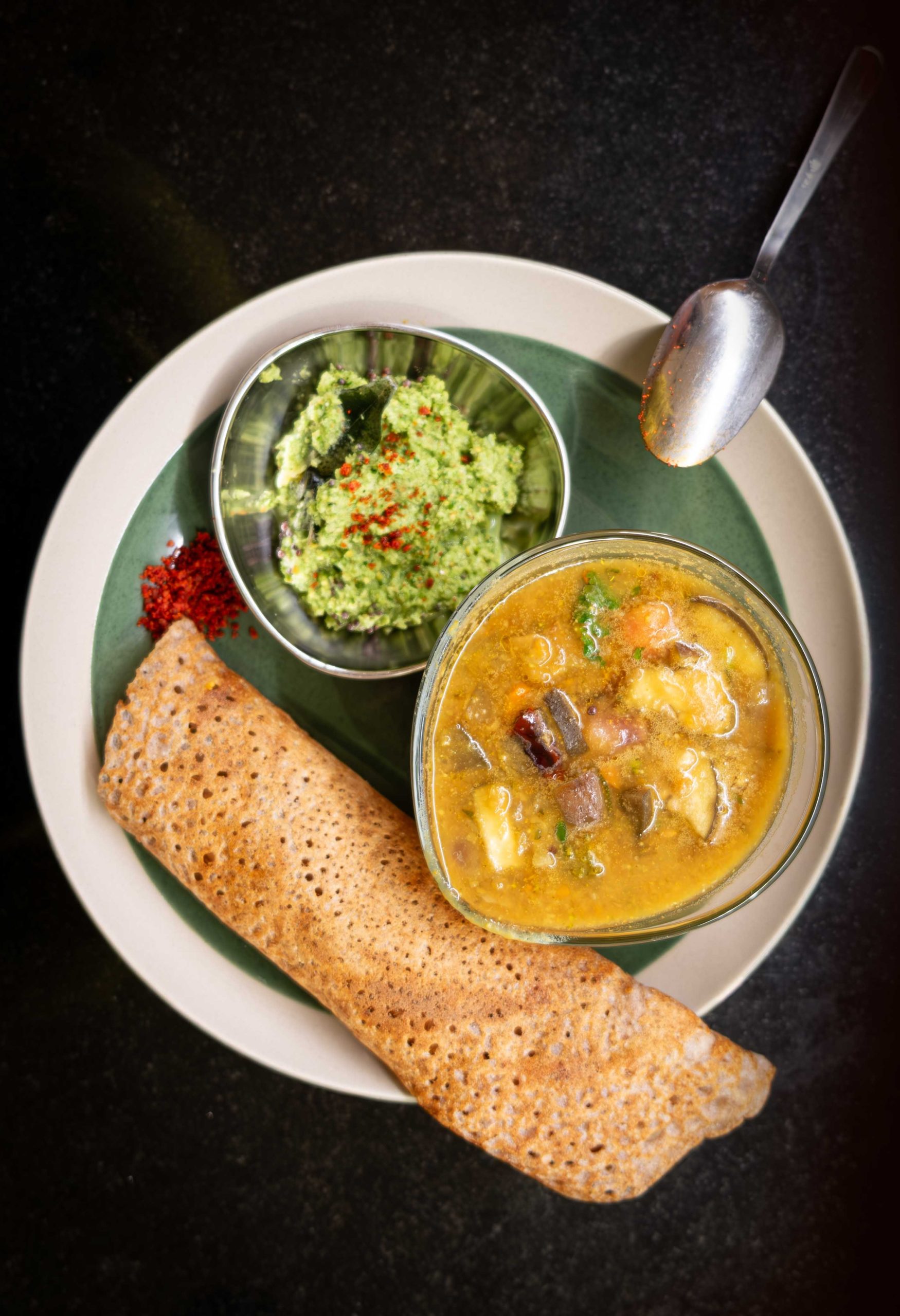
"It took me a long time to return to that place of cooking from instinct."
Tripti Aggarwal is from Sadhaura, a small town in India. She moved to the Netherlands in 2017, initially for work, but her journey quickly unfolded into something deeper, it became just as much about self-discovery as it was about professional growth.
Raised in a family of six sisters where cooking was instinctively passed from mother to daughter, Tripti resisted the kitchen for most of her life. To her, cooking symbolized the domestic expectations placed on women, something she actively pushed against. It wasn’t until she was 25 that she started experimenting with cooking, not out of necessity, but as a creative act, a way to reclaim the experience on her own terms.
At first, she relied on precise measurements and online recipes, avoiding the vague, intuitive methods of her family. But over time, she found her way back to the kind of cooking she grew up: that place of cooking from instinct.
In the Netherlands, far from the comfort of home-cooked meals and familiar spices, Indian food became more than nostalgia — it became a vital way to care for herself.
What started as rebellion turned into ritual, reminding her that nourishment is not just about flavour or function, but about memory, rhythm, and self-awareness.
Ioana: Tripti, do you want to start by telling me why you moved here?
Tripti: I moved here for work. I had always wanted to live in Europe, even though I didn’t really know why. The charm of a slower life than I was used to, I guess.
Ioana: And how was your relationship with food when you first arrived? How did you feel about it?
Tripti: Honestly, I felt miserable. Food, for me, has always been about more than just function – it’s about warmth, comfort, and emotion. I was used to having hot, delicious meals that meant something. When I came here, I had to eat cold salads and almost salt-less sandwiches, which I wasn’t used to at all. I didn’t have enough time to cook myself a proper meal, and even buying ingredients took up a lot of mental space due to language and accessibility.
There was only one shop in Leiden — an Asian store, not even specifically Indian — where I could find anything familiar. I was living in Oegstgeest, and that made it even harder to access the ingredients I needed. So yeah, it was tough in the beginning.
For, I think, six months, I ate two dishes. I would just make them in bulk and eat, eat, eat. Now I can’t eat them the way I cooked then – those dishes. I couldn’t eat them at all for a long time, I can’t imagine having eaten those dishes every single day. But that was what got me through the first six months here. Just heat them, eat them, and feel good.
Ioana: What happened when you moved to Amsterdam, where you have more options?
Tripti: I was so happy! And the fact that I could order food from any Indian restaurant in Amsterdam, that was like icing on the top.. And of course, my romance was a short-lived one because you can’t eat restaurant food every day. The restaurant food in Amsterdam is also not the best – at least for Indian food.
Ioana: the food in the Indian restaurants, is it actually Indian food, or has it been adapted to European taste?
Tripti: I think most of the food you get here is Indian food that’s adapted to European taste. What I feel is, most of it is adjusted – but there are some restaurants that have one or two dishes that come really close to the authentic taste.
Ioana: When you were home, did your parents teach you how to cook? Is that something you did back home with your mom, your grandma, or someone else?
Tripti: So, I have five sisters, and most of them learned cooking from my mother. And it shows. They really tried hard to teach me, “You should know something to cook yourself.” But for me, cooking was how I saw patriarchy playing a role. And that was not for me.
Ioana: So what happened then?
Tripti: I didn’t cook until I was 26, I think. And even then, it was only because I moved back from Bombay — Mumbai — to the Delhi region. And in Delhi, there’s no women’s safety. I was using this very private kind of transport – a group of people would hire a car to go to work everyday on a monthly basis. You go to the office and come back together at a set time. And for me, that was very weird and new. Suddenly, I had a lot of free time after coming back home.
Ioana: So you started cooking because you had too much free time?
Tripti:I started cooking because I wanted to do something creative, to try a new skill. I thought, let me make this super complicated dish, even though I didn’t know how anything worked. But I started anyway.
Ioana: You learned by looking online?
Tripti: Yes, online. I didn’t ask anyone from home.
Ioana: Not even your mom?
Tripti: No. The way they explained things back home didn’t work for me. It was always, put a bit of this, a pinch of that. They are intuitive cooks. For me, that wasn’t helpful. I needed structure – measurements, steps, reasons. It took me a long time to return to that place of cooking from instinct.
Now I cook almost entirely by intuition. I don’t measure anything. That shift didn’t come naturally; I had to build my own understanding first, then slowly let it go. It’s funny – I was never like that growing up, but now, it’s how I feel most connected to food.
Ioana: When did you start appreciating food like this?
Tripti: In my twenties. I took a year-long break and moved to a city where I lived as a paying guest. The food was horrible. But I saw my then best friend taking care of himself through food – choosing where to eat, making sure it was nourishing, even when eating out. That really stayed with me. Later, during my masters, I noticed the same thing. Men around me were cooking for themselves, eating well. Meanwhile, I wasn’t eating unless the food was tasty. By my second year, I started realizing I needed to eat better, more consciously. Nourishing is not a gender or patriarchal notion, It’s self care!
Ioana: I wanted to ask about Ayurveda — is it something that’s part of your life, or something you discovered later?
Tripti: The practices of Ayurveda are already intertwined with how we live – how we eat, when we wake up, what we eat at certain times. For example, our parents or elders always told us not to eat yogurt at night because it’s a cooling food and could give you a cold, or cause phlegm, or disturb the balance of vata or kapha. These things were never labeled “Ayurveda” in our house – they were just common knowledge passed down through generations.
Ioana: So these concepts were there, but not explained as part of a system?
Tripti: Exactly. It wasn’t like, “this is Ayurvedic, so we should do it.” It was just how things were. Like when you have a sore throat – you already know what to eat, what to avoid. But I never really questioned why. Why a certain type of lentil goes in a particular dish, while others don’t? What purpose does it serve in the body? Ayurveda helped me start thinking in that way.
Quantities are super important in Ayurveda. A lot of people drink ginger tea, for example, but too much ginger is bad. Same with turmeric – people think it’s magical, but too much mightmake you anaemic through triggering iron absorbtion. Even garam masala, which is a mix of many spices – just one pinch more can really change how it affects the taste of the food, the heat, and how it works with ones body. You have to understand both your own body and the food
Ayurveda looks at food in a holistic way. What your body tolerates, what it doesn’t, how much you eat, and when you eat it. Even things like seasons matter.
They generate a lot of internal heat, and you don’t need that when it’s already hot outside.
Ioana: That’s fascinating. We don’t have that in Romanian culture.
Tripti: In India, the climate plays a big role. Where I come from, summers are harsh, winters even harsher, so you really feel how food affects your body. That knowledge becomes second nature.
In India, every meal is cooked fresh. Even if you don’t have help, people cook every single day. Meal prepping didn’t exist for me until I moved here. Frozen food? I had never heard of that – frozen vegetables, pre-cut wedges, that was completely new.
We’re used to buy vegetables fresh, maybe just an hour before cooking. You wash them, chop them, cook them, and eat them — all in the same rhythm. It was a big shift when I came here. The climate is different, the shelf life is longer, and people take more liberties with food storage.
And whether it’s from tradition, necessity, or curiosity, I’ve learned this — in the end, one has to understand both ones’ body and the food on your plate.