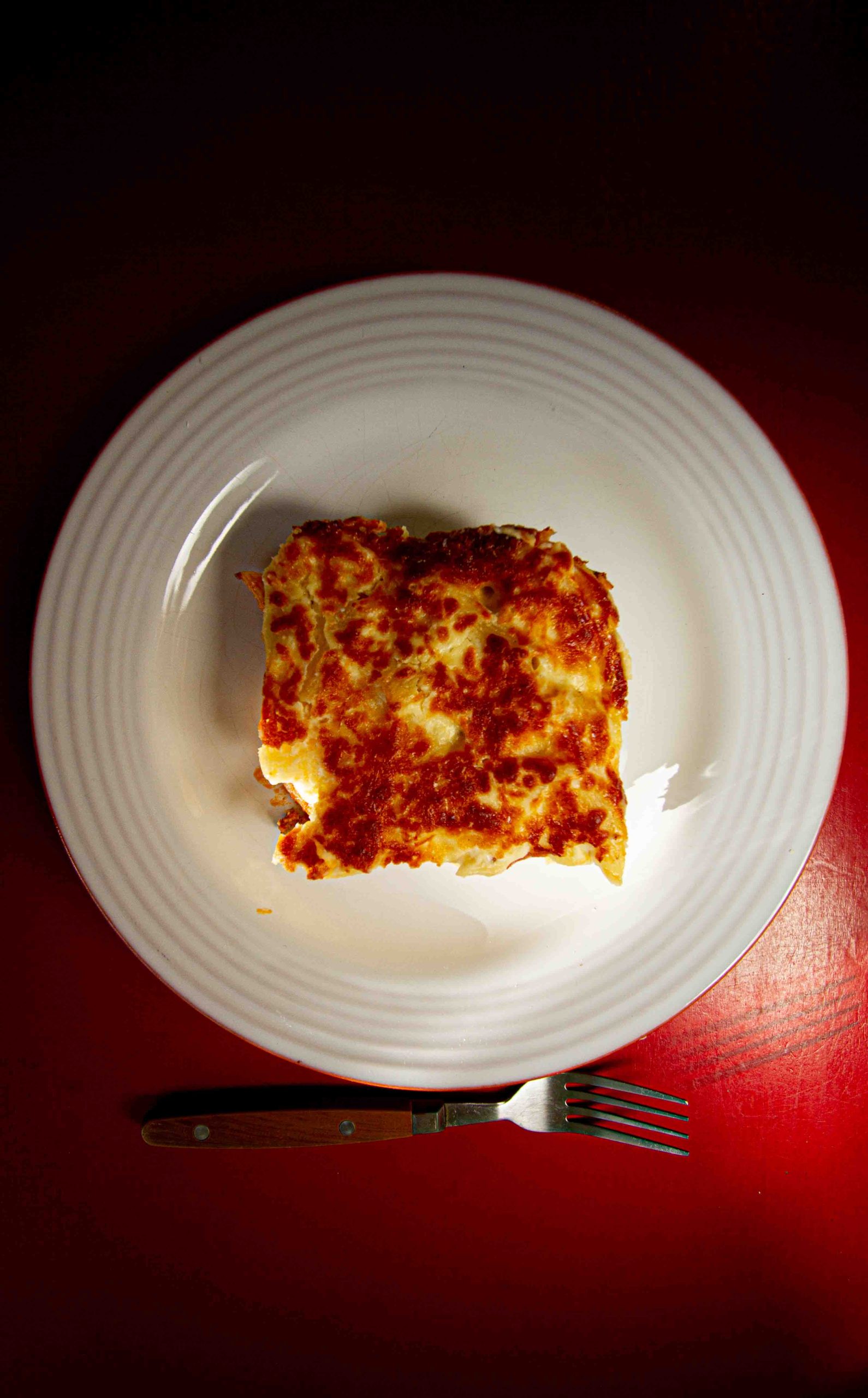
"It's a meal you don't eat alone. That's the thing about Egyptian food: it's meant to be shared."
Akram El Sayed is 34. He grew up in Giza, Egypt, but hasn’t seen his family in six years.
He used to think cooking was just something his mother did, and he wasn’t allowed in the kitchen, despite his early curiosity about kitchen appliances. He always asked his dad for kitchen toys, but his mother never approved—she believed the kitchen was a place for women.
When he was four, his father surprised him with a real set of utensils and cutlery, which he still keeps to this day. As he grew older, he paid close attention to how his mother cooked, and as a teenager, he found himself drawn to both cartoon and cooking shows.
He has now been living away from home for 12 years, and in an attempt to stay connected to his roots, he finally stepped into the kitchen. At first, it was to impress a girl he was dating—he baked her red velvet cupcakes. But it wasn’t really about the food. It was about something else, something harder to name.
He recently obtained his Dutch nationality. Now, he can finally go home, see his mother and sister again. He wonders if it will feel different—if they will.
Ioana: Do you want to tell me about your relationship with cooking and your mom? Is there anything to take from there?
Akram: Yeah, yeah. Recently, my mom told me that I was always in the kitchen with her since I was a baby. Actually, there’s a funny story. One time, I think I was two years old, she was studying with my sister in her room. My sister is three years older than me. They couldn’t find me for two hours—nowhere in the house. Then, they heard something from the kitchen—voices or sounds. They went there, didn’t see anything at first, but eventually, they found me hiding in the oven.
Ioana: In the oven?
Akram: Inside the oven. I guess I was curious—I wanted to feel like a chicken. I thought that when you put a chicken in the oven, it goes somewhere, gets dressed up or changed, and then comes back out cooked. I wanted to see where the chicken went and who cooked it.
Ioana: So what did you think after you came out?
Akram: I don’t remember, of course. But yeah, those were some of the things I did. My mom also said that when I was a kid, I’d always crawl into the kitchen and hand her the pots she needed. I’d notice what she was cooking and give her the right pot. But sometimes, I caused disasters—like spilling oil all over the floor!
Ioana: It sounds like cooking was a big part of your bond with your mom.
Akram: Yeah, definitely. Especially after my father passed away, she spent most of her time in the kitchen. It might have been her way of coping, but it became her space. Even now, at 73, she spends most of her day there—cooking, cleaning, smoking, or having tea. She has this tiny yellow stool she’s kept since I was born, even moving it with us to new houses.
Ioana: It sounds like you inherited that love for the kitchen from her.
Akram: Yeah, I think so. The kitchen has always been a comforting place for me.
Ioana: So, is Egyptian cuisine something you started exploring more during the pandemic?
Akram: The feeling of missing home started to hit me, and I began cooking Egyptian food then—during the pandemic. Honestly, I never liked Egyptian food before.
Ioana: Why?
Akram: It’s not like I missed it. I was living in Dubai, and I’d visit Egypt twice a year. I’d eat the food I actually missed from there, and the rest? Not a big fan. I used to think Egyptian cuisine was just what I ate at home—basic, predictable. Tomato sauce with vegetables and meat. Rice. I was never into that combination at all.
But I was also mistaken. Egyptian cuisine is wild. It’s broad. It’s layered.
I started realizing that when I began craving certain things, like macaroni béchamel. That dish—it meets my love for pasta, but it’s also a taste of home. It’s a meal you don’t eat alone. That’s the thing about Egyptian food. It’s meant to be shared.